When Virtual Touch Speaks Louder Than Words: Therapy Robots and Mental Health
Discover how virtual touch is revolutionizing rehab and the caregiver-patient relationship. Fewer words, more gestures—let’s understand each other differently.
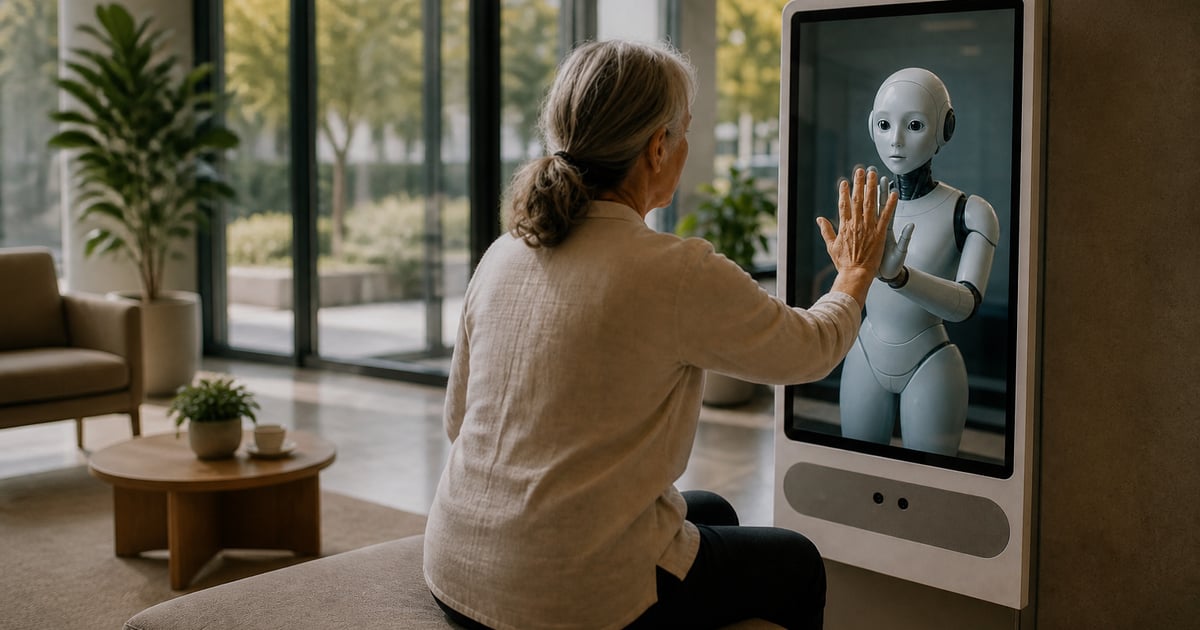
Introduction: When a Gesture Says More Than a Thousand Words
Have you ever felt like a simple gesture said more than a long explanation? In the world of well-being and mental health, communication is key, but it’s not always about words. Today, innovation is shaking things up: researchers have shown that a therapy robot, controlled remotely, can support a patient through touch—even from miles away. This “virtual touch” opens up new possibilities, especially in rehabilitation. Dive in with me to this silent revolution where gestures and feelings matter more than words.
The Context: Why Rethink Communication in Therapy?
In many clinical situations, explaining a movement or instruction can quickly get complicated. Words aren’t always enough to convey a feeling, a posture, or a rhythm. - Patients can feel lost with too much verbal info. - Caregivers get exhausted repeating, explaining, rephrasing. - Remotely, the barrier of speech adds to the screen barrier. That’s where the idea of a mediator robot comes in—able to transmit gestures, intentions, even a kind of empathy, without the filter of language.
How Does Virtual Touch Work?
The principle is simple but mind-blowing: the caregiver uses a haptic device—a kind of advanced joystick that captures their movements. On the other end, the patient wears an exoskeleton. Every movement from the professional is faithfully transmitted to the exoskeleton, which then guides the patient’s body. - **Direct movement transmission**: no more long explanations, the patient feels the guidance in their own body. - **Intuitive**: the caregiver adjusts their gestures in real time, adapting to the patient’s reactions. - **Less cognitive load**: fewer verbal instructions, more space for exp
Fewer Words, More Efficiency: The Benefits Observed
The study’s results speak for themselves: guiding a patient remotely through virtual touch lets therapeutic movements be done faster and more effectively. - **Time-saving**: each movement is understood and done more quickly. - **Less fatigue for caregivers**: mental and physical load doesn’t increase, even with the new device. - **Better understanding**: patients pick up the gestures more naturally, without getting lost in complex instructions. This way of interacting could transform rehab, but also other forms of remote support.
Humans at the Heart of Virtual Touch: Nuance and Limits
Can a robot really replace the human relationship? Nope, and that’s not the goal. Virtual touch doesn’t take away empathy or the professional’s presence. On the contrary: - **It extends the caregiver’s hand, even from afar.** - **It creates a new kind of exchange, sometimes clearer than words.** - **It respects each patient’s uniqueness, allowing for personalized support.** But there are limits: - Not all gestures can be transmitted. - Tech doesn’t replace listening, eye contact, or human intuition. - It’s not right for every situation or every patient. The key is to see these tools as comp
What Science Says About Human-Robot Interactions
Neuroscience research is digging into this: how does the brain perceive a gesture transmitted by a machine? Several studies, including the one in Scientific Reports (2026), show that: - The human brain adapts amazingly well to haptic feedback from a robot. - The feeling of being guided, even virtually, activates brain areas similar to real touch. - The quality of the therapeutic relationship depends more on intention and clarity of gesture than on physical presence. In other words, technology doesn’t necessarily dehumanize the relationship. It can even enrich it, if used wisely.
Real-Life Examples and Future Potential
Imagine you’re in rehab after an injury, unable to get to the clinic. Thanks to virtual touch, your caregiver can support you, correct your movements, encourage you… as if they were right there with you. Beyond physical rehab, imagine: - Relaxation workshops where posture is adjusted remotely. - Support for motor disorders or fine motor skills. - Mental health interventions where a reassuring gesture comes through technology. Of course, all this needs an ethical framework and must be adapted to each situation, but the possibilities are huge.
How Lunaia Can Help You Explore Other Ways to Communicate
Even without an exoskeleton, you can explore the richness of sensations and non-verbal cues with Lunaia. The app invites you to reconnect with your feelings every day: - With the emotional check-in, you take time to notice what you feel, without always using words. - Breathing or guided relaxation exercises help you listen to your body and find instant calm. - Meditation sessions help you pay attention to your sensations, so you can better understand what’s going on inside. Check out all these features at [https://lunaia.me](https://lunaia.me) and let yourself be guided to a more intuitive w
Takeaway: Innovating Means Learning to Communicate Differently
Virtual touch isn’t just a tech feat. It’s a new art of communication, rediscovering the power of a simple gesture—even from afar. In mental health and rehab, it reminds us that what matters isn’t always in what’s said, but sometimes in the shared experience. Source: Neuroscience: nature.com subject feeds, Scientific Reports (2026).
When Virtual Touch Speaks Louder Than Words: Therapy Robots and Mental Health · Blog Lunaia