What if Your Brain Worked Like a Bee’s? Neuroscience and Social Vibes
Sometimes, a simple smell is enough to shift a group’s mood. Discover how your social brain adapts, with insights from the latest neuroscience research.
Introduction: When a Scent Changes the Whole Group
Have you ever felt the vibe in a room shift, without really knowing why? Sometimes, just a simple smell can transform a group’s energy, influence the mood, or change the group dynamic. This isn’t just a random thing—neuroscience studies it, and there’s a surprising example… in bumblebees! Dive in and see how you, too, are influenced by these invisible signals.
The Social Brain: A Constant Adaptation Machine
Our social brain is an adaptation expert. It’s always picking up subtle signals: gestures, posture, tone of voice, but also smells and the general vibe. Without you even realizing, this info guides your reactions, shapes your confidence or when you speak up, and helps you sync with others. This adaptation skill is key for social life, but it usually works behind the scenes, far from conscious logic.
The Bumblebee Experiment: One Scent, and Everything Changes
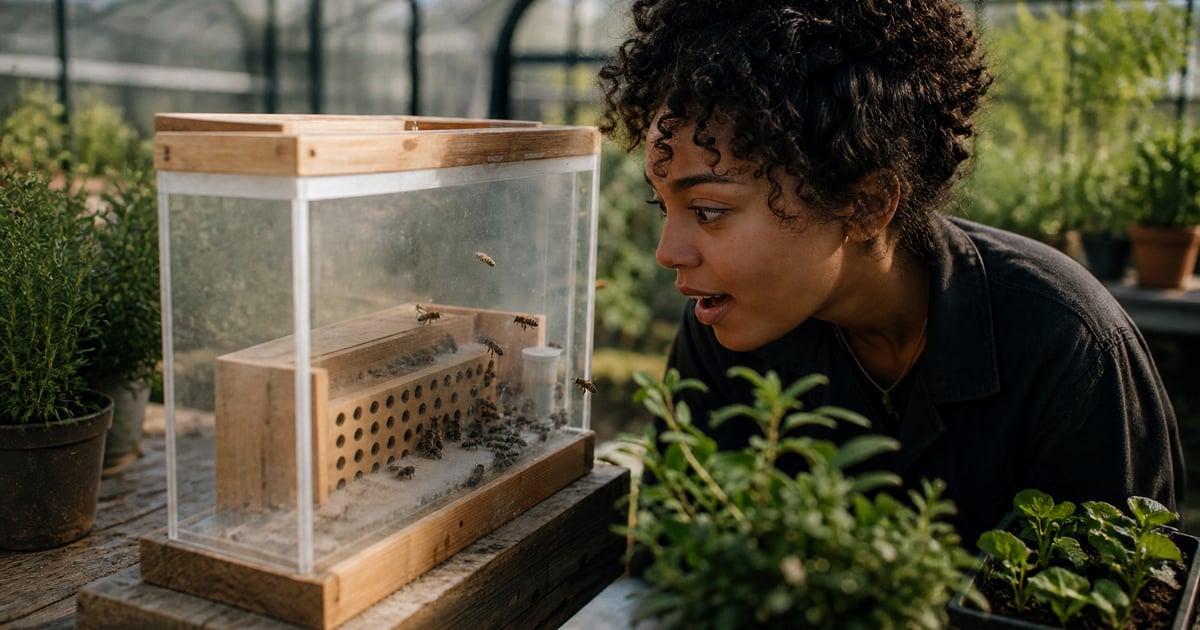
In a recent study published on nature.com (Neuroscience: nature.com subject feeds, Communications Biology, 2026), researchers found that bumblebees (Bombus terrestris) can learn to link a new scent to a specific social context. If an unknown smell is connected to the queen, it directly changes how the worker bees behave: they shift their preferences and even their egg-laying, depending on whether there’s brood present. In other words, an invisible cue like scent becomes a powerful group regulator. - **Social bonds and scent memory**: Bumblebees use memory to connect scents to social roles. -
Invisible Signals: How Scents Shape Our Groups
For humans too, smell is a subtle but powerful messenger. A familiar scent can comfort you, while an unknown one might intrigue or unsettle you. At work, in school, or at dinner, the scent in the air is one of those hidden signals that can shift the group’s mood, trust, or even creativity. - **Real-life examples**: - A space that smells like fresh coffee feels more welcoming. - A meeting room with neutral scents helps you focus. - A place with a bad smell can make conversations tense, even if you don’t know why. These details, often ignored, shape your social experience every day.
Vibes and Behavior: Real-Life Examples
Imagine: you walk into a room that smells like madeleines, and suddenly you feel calm and ready to chat. On the other hand, the smell of cut grass might bring back childhood memories or give you energy. In groups, these sensory signals work quietly, making some places feel warm and others more distant. - **Speaking up**: In a relaxed vibe, it’s easier to express yourself. - **Cohesion**: A nice scent can boost the sense of belonging. - **Exclusion**: On the flip side, a bad smell can create distance or discomfort. These mechanisms are subtle but real, and you’ll see them in all kinds of soci
The Rational Brain Trap: Thinking You’re Immune
We like to think our decisions are purely rational, based on logic. But science shows our social brain is way more easily influenced than we think. Even a barely noticeable scent can shift your mood, make you more open or cautious, or push you to join in or pull away from a group. This influence bias is universal and affects everyone, even the most logical thinkers. What matters is being aware of it, so you can better understand your reactions—and not judge yourself too harshly.
What Science Says: Proof, But Also Limits
Neuroscience confirms that smell has a big impact on the social brain, in both animals and humans. Studies on bumblebees show that scent memory can organize a whole group. For humans, research is ongoing: some experiments prove that scents in the air affect cooperation, trust, or how we see others. But heads up: the effect of a scent depends on context, personal history, and culture. It’s never a magical or universal influence. But understanding these mechanisms is already a step toward navigating social complexity. _Source: Neuroscience, nature.com subject feeds._
How Lunaia Can Help You Tune Into the Vibe
Noticing how the vibe affects your well-being is already progress. The Lunaia app helps you develop this inner awareness with practical tools: - **Emotional check-in**: To spot how you feel in a group or place. - **Breathing exercises**: To ground yourself and manage your feelings, even when the vibe shifts. - **Guided meditations**: To strengthen your ability to observe, without judgment, what’s around you and how you feel. Check out these resources and more tips at https://lunaia.me to live better with your social brain and find your balance, wherever you are.
What if Your Brain Worked Like a Bee’s? Neuroscience and Social Vibes · Blog Lunaia