Solar Eclipse of August 12, 2026: When Summer Turns Dark in Broad Daylight
On August 12, 2026, France will experience an almost total solar eclipse. Discover how this rare event can shake up your senses and your well-being.
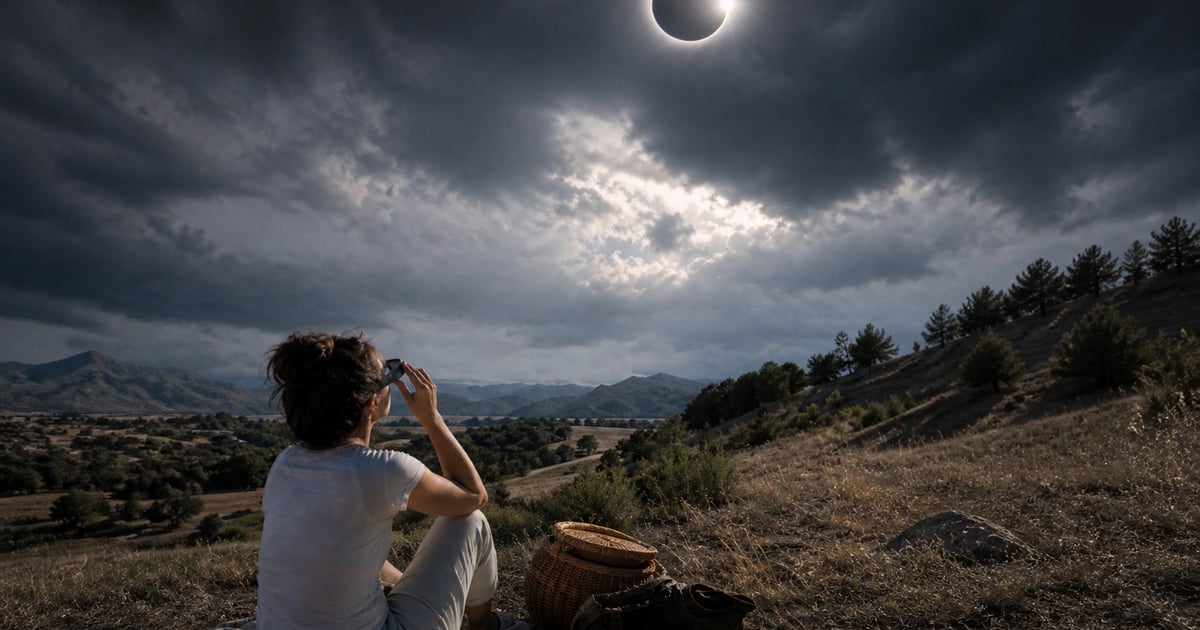
When High Summer Turns to Shadow: An Introduction to the 2026 Eclipse
Picture yourself in the middle of August, under a blazing summer sky. Suddenly, the light fades, plunging you into an atmosphere you've never felt at this time of year. On August 12, 2026, France will witness an almost total solar eclipse, an event that rarely happens at these latitudes. Up to 99.5% of the Sun could disappear behind the Moon, creating a strange, almost unreal vibe in the middle of the afternoon. This phenomenon is much more than just an astronomical show—it's always fascinated humanity and shaken up our senses. This article invites you to explore why and how this eclipse could
Understanding the Phenomenon: Why the Sun Will Disappear in August 2026
A solar eclipse happens when the Moon passes between the Earth and the Sun, blocking its light for a few minutes. The one on August 12, 2026, is especially rare because it will be visible across much of France, with darkness covering almost the entire solar disk in some regions. According to Sciences et Avenir, the event will take place in the early afternoon, with exact times and maps available to track the shadow's path. The next chance for such a spectacular eclipse in France won't come for decades. So, whether you're an astronomy fan or just curious to experience something out of the ordin
When the Light Fades: Sensory Effects and a Unique Atmosphere
What makes a solar eclipse stand out is its immediate impact on your senses. In just a few minutes, the brightness drops, the temperature falls, and a hush settles over everything. Even animals, like birds, might go quiet, fooled by the sudden darkness. You'll notice unusual shadows, a gray, diffuse light, and a magical feeling of being cut off from everyday life. It's also a source of chills: seeing day turn to night in the middle of summer is a phenomenon that shakes up your sense of reality and invites you to pause and reflect. Many people describe feeling unity or humility in the face of n
Why Are We So Fascinated by These Phenomena?
Since ancient times, solar eclipses have intrigued, scared, or amazed people. They disrupt the normal order and spark our deep curiosity: why does the Sun, the source of life and warmth, suddenly vanish? Your brain, like everyone else's, is wired to notice and try to understand unexpected changes. This thirst for meaning kicks in when something so unusual happens. Watching an eclipse is also about feeling the togetherness of a shared moment—a collective 'wow' that breaks the routine. Even though science has cleared up the old fears, the emotion remains: the unexpected, the mysterious, and the
Where, When, and How to Watch the Eclipse Safely
How well you see the eclipse will depend on where you are in France. Some areas, especially in the southwest, will see up to 99.5% of the Sun covered. Sciences et Avenir offers detailed maps and exact times for each region. To enjoy the show safely, you must wear special eclipse glasses with CE certification, even if the light seems weak. Never look directly at the Sun without proper protection—your eyes could be permanently damaged. Plan your viewing spot ahead of time, pick a clear area, and why not invite some friends to share this unique moment? Check the weather forecast and get ready a b
What Science Says: The Impact of Natural Phenomena on Mental Well-Being
Witnessing a rare natural event like an eclipse isn't just fascinating for your mind—it's also good for your mood. Many studies show that observing nature, especially extraordinary events, can reduce stress, boost your sense of wonder, and strengthen your connection to the world around you. The concept of the 'sublime'—that mix of awe and humility in the face of something vast—is studied in positive psychology as a source of well-being. Even though research on the specific effects of eclipses is limited, many people report feeling calmer, happier, or more able to put their worries in perspecti
How Lunaia Can Help You Make the Most of the Eclipse (and Beyond)
At Lunaia, we truly believe in the power of curiosity and connecting with nature to boost your mental well-being. The app offers tools to help you recentre before, during, or after the eclipse: emotional check-ins to identify how you feel, breathing exercises to ground you in the moment, and guided meditations to cultivate awe and mindfulness. Watching this kind of event is also about learning to slow down and savor what’s out of the ordinary. Find more ideas and tools at https://lunaia.me to turn every rare occasion into a date with yourself.
What the Eclipse Reminds Us: Slow Down, Observe, Be Amazed
The eclipse on August 12, 2026, will last only a few minutes, but its memory can stay with you for a long time. By taking the time to pause, look up at the sky, and feel the moment, you’re giving yourself a real gift: wonder, presence, and a break from the hectic pace of summer. This kind of phenomenon reminds you that nature still has the power to surprise you, unite you with others, and invite you to take care of your mental balance. Whether you’re alone or with friends, this moment will be a precious break in your routine—make the most of it.
Go Further: Sources and Useful Resources
This article is based on information from Sciences et Avenir in real time: accueil (https://www.sciencesetavenir.fr/espace/eclipse-solaire-du-12-aout-2026-a-quelle-heure-et-ou-l-observer-en-france_193174?xtor=RSS-9). There you’ll find details on times, affected areas, and maps to help you plan your viewing. To learn more about the link between natural phenomena and well-being, you can also check out the resources at https://lunaia.me.
Solar Eclipse of August 12, 2026: When Summer Turns Dark in Broad Daylight · Blog Lunaia