Can Your Brain Reason Without Words? Neuroscience Answers
What if you could solve puzzles without talking to yourself in your head? Discover how your brain separates logic and language.
Introduction: Can You Really Think Without Words?
Have you ever had a sudden intuition or solved a problem without forming a single sentence in your head? We often think that thinking means talking to ourselves. But a study by MIT neuroscientists, reported by Mind & Brain News – ScienceDaily, challenges this idea: your brain can reason without using language. Dive into this surprising discovery and explore how logic and language work together (or separately) in your mind.
The Science: Where Language and Logic Part Ways
We often link logical thinking to language, as if they're inseparable. But neuroscientists have long wondered: **does logic need words?** To answer, the MIT team studied people with severe language disorders—aphasia or brain injuries—who could still solve logic puzzles just as well as people without such issues. This experiment challenges the classic view of reasoning.
How Does Your Brain Tackle a Puzzle?
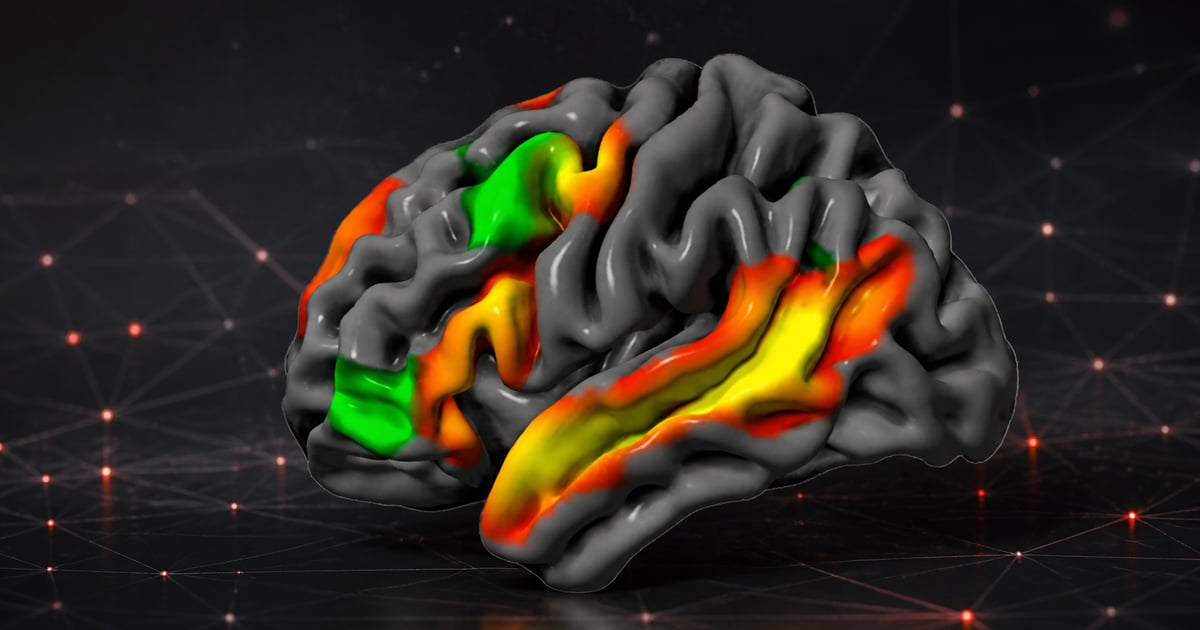
When you solve a puzzle, several brain regions light up. MIT researchers used brain imaging (fMRI) to see what really happens. The result: - The language areas (Broca’s and Wernicke’s areas) stay almost inactive when you’re doing pure logic. - Other brain networks, especially those involved in abstract reasoning and problem-solving, take over. This means your brain has specialized circuits for logic, independent from those for language.
Real-Life Examples: Reasoning Without Words
To get it, imagine you have to find the next shape in a logical sequence (like: square, triangle, square, triangle…). Even without talking to yourself, your brain can spot the pattern and guess the right answer. MIT’s tests show that even people who lost language after a brain injury can do these tasks. Other examples: - Reading a map and finding your way without narrating it. - Assembling furniture by just following pictures. - Solving a visual puzzle without verbalizing each step. So many situations where logic works in the quiet of your mind.
Language and Logic: Partners, Not Twins
So, should you ditch language to think? Not at all! Language is still a great tool to: - Organize your complex thoughts. - Explain an idea to someone (or yourself). - Remember, plan, conceptualize. But pure logic—spotting a pattern, understanding a structure, solving a brainteaser—works without needing to put everything into words. These are two brain circuits that work together, but can also run separately.
What Science Says: Nuances and Limits
MIT’s findings are fascinating, but they don’t mean language is useless or that everyone can do everything without words. Here’s what research says: - Simple or visual logic puzzles can be solved without language, but for more complex reasoning (advanced math, philosophy…), language becomes super helpful. - People without language sometimes compensate with other mental skills (visual memory, intuition). - Silent logic exists, but it has limits—especially for communicating or structuring deep thoughts. In short, your brain is flexible, but each circuit has its role.
How Lunaia Can Help You Explore Silent Logic
At Lunaia, we know mental well-being also comes from knowing yourself and tuning into your own thinking styles. Our app offers tools to: - Do regular check-ins and notice how you’re feeling without always putting every emotion into words. - Practice breathing or guided meditation to calm the verbal chatter and make space for intuition or silent logic. - Explore resources on the brain and well-being, to better understand how you work, with or without words. Find out how to tame your inner dialogue… or its absence, right on https://lunaia.me.
Can Your Brain Reason Without Words? Neuroscience Answers · Blog Lunaia