3,500-Year-Old Skeletons Shake Up the History of Syphilis
What if syphilis is much older than we thought? Archaeological finds in Vietnam are challenging what we know about infectious diseases.
Introduction: When the Past Changes How We See Health
Think you know the history of major diseases? A recent archaeological find in Vietnam might just change your mind. Skeletons dating back 3,500 years, showing signs of infections passed from mother to child, are shaking up what we thought we knew about syphilis—a disease long considered 'modern.' Dive into this fascinating journey where science, history, and mental health meet, and see why understanding our past can actually help you take better care of yourself today.
An Archaeological Site Where Bones Speak
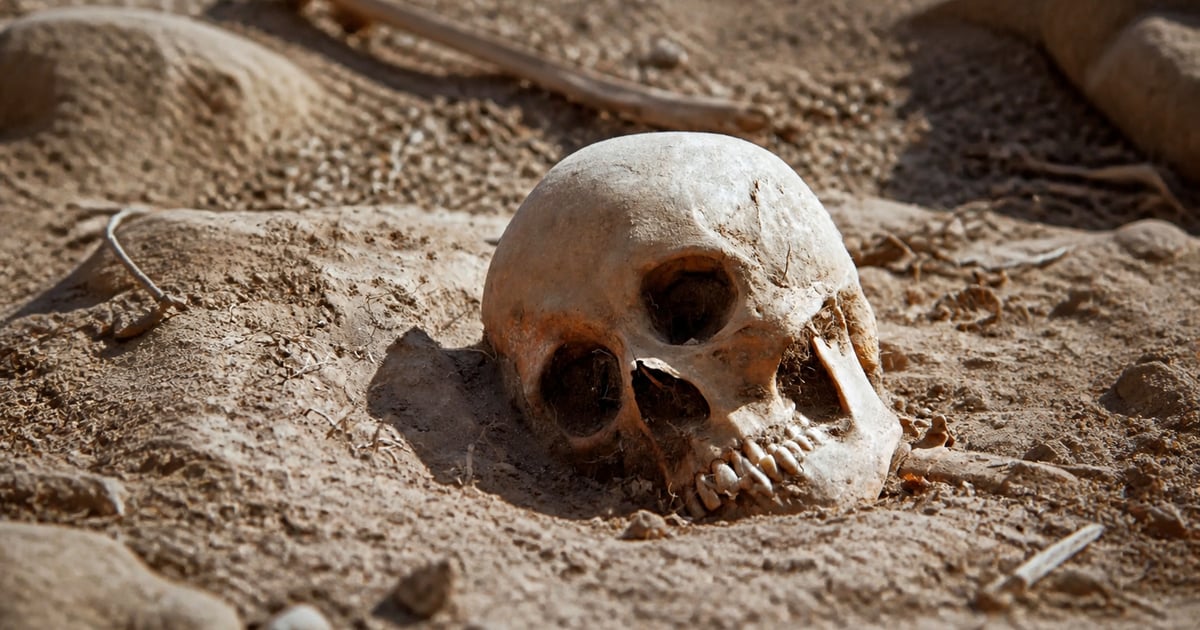
In the heart of Vietnam, at a Bronze Age site, researchers uncovered several surprisingly well-preserved skeletons. Some show bone lesions typical of infections passed from mother to child—a transmission route often linked to syphilis. These marks, long overlooked or blamed on other diseases, have experts wondering: have we underestimated how old syphilis really is, or is this another forgotten cousin? - The excavations revealed rare clues about ancient people's health. - The lesions are similar to those caused by treponematoses, a family of diseases that includes syphilis. - The study of the
Syphilis: A Truly Recent Disease?
Up until now, syphilis was thought to have appeared in Europe at the end of the 15th century, maybe brought over from the Americas by Spanish sailors. This theory, backed by the lack of clear evidence in old European bones, seemed solid. But the Vietnamese discovery changes everything: - Marks similar to those of syphilis have been found on bones 3,500 years old. - This suggests that related diseases—or even syphilis itself—were around long before modern times. - This challenges us to rethink how we interpret archaeological and medical data.
Yaws, Syphilis, and Other Treponematoses: Blurred Lines
Syphilis isn’t the only disease that leaves marks on bones: yaws, a tropical bacterial infection, can cause similar lesions. Both diseases belong to the same family (treponematoses) and have a lot in common: - They can be passed from mother to child (congenital). - Bone damage is hard to tell apart after thousands of years. - Symptoms are often very similar, especially in ancient remains. For archaeologists and doctors, this makes it seriously tough to identify exactly what diseases ancient people had. The past is often more complicated than it looks.
What This Changes for Our Understanding of Diseases
If syphilis, yaws, or a related disease were already around 3,500 years ago, our whole story of health gets a rewrite. We used to think some infections were 'recent,' tied to social changes or population movements. But these ancient bones show they've been with us for millennia: - Infectious diseases have always been part of human history, way before writing or modern medicine. - Mother-to-child transmission existed back then too, showing how vulnerable ancient people were. - Understanding these historical patterns can help us put today’s health fears and myths in perspective.
What Science Says: Caution and Debate
The study published by Health & Medicine News — ScienceDaily highlights the need for caution in this kind of research. Scientists stress a few things: - Bone lesions are clues, but not always enough to identify a specific disease for sure. - Ancient DNA analysis is tough on samples this old, so certainty is limited. - The debate continues about the true origin of syphilis and how to tell it apart from other treponematoses. Bottom line: science moves forward, but it also knows when it doesn’t have all the answers. This scientific humility is key to making progress—and keeping an open mind abo
Mental Health and History: Why It Matters for Us Today
You might wonder what the history of syphilis has to do with your mental well-being. Actually, understanding where diseases come from, accepting uncertainty, and challenging old ideas are all part of a healthy mindset: - Learning to put fears about illness in perspective. - Getting more comfortable with uncertainty and the world’s complexity. - Realizing that mental and physical health are part of a long human story. Connecting with this knowledge helps you stay curious, develop a calm, critical view of health issues, and remember that science is always evolving.
How Lunaia Can Help You Take a Step Back
At Lunaia, we believe that understanding and kindness toward yourself are key to mental well-being. After seeing how complex (and sometimes surprising) our shared history is, you can use the Lunaia app to: - Take a breather with guided breathing exercises. - Note your feelings in the daily check-in and see how you react to uncertainty. - Try meditations to calm your mind when health worries pop up. Learn more about Lunaia’s well-being tools: https://lunaia.me
Takeaway: Science, History... and You
Finding out that diseases like syphilis might be way older than we thought means accepting that the past still holds many secrets. This realization invites us to stay curious, avoid getting stuck in our beliefs, and remember that taking care of ourselves also means being open to discovery and nuance. The road to knowledge is long and sometimes winding, but it helps us understand who we are—and move forward with confidence.
3,500-Year-Old Skeletons Shake Up the History of Syphilis · Blog Lunaia